Cubesat Course 2.0
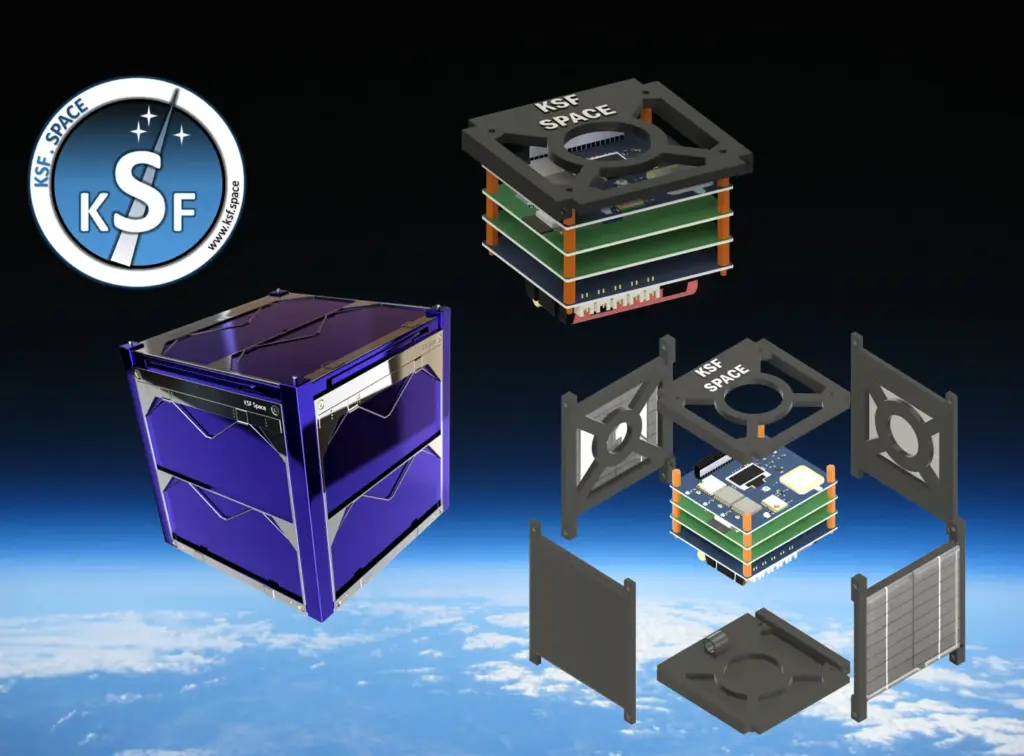
CubeSat Course by KSF Space: Building the Future of Nanosatellite Engineering
The aerospace industry is undergoing its most radical transformation since the Apollo era. As the shift toward miniaturization accelerates, reliance on multi-billion-dollar geostationary satellites is being supplemented—and often replaced—by agile, low-cost, and highly capable small satellite constellations. At the absolute center of this technological paradigm shift is the CubeSat Course offered by KSF Space Foundation, a flagship training program designed to equip the next generation of engineers, researchers, and tech pioneers with actionable nanosatellite engineering skills.
Whether your goal is to design flight-ready payload hardware, master orbital mechanics, navigate complex international launch regulations, or operate a live space mission from a ground station, the CubeSat Course provides the comprehensive framework needed to transition from theoretical engineering to real-world orbital deployment.
Executive Summary: Course Overview
The table below breaks down the core parameters of the NanoSatellite Engineering Professional (NEP) program provided by KSF Space.
| Attribute | Program Details |
|---|---|
| Official Title | NanoSatellite Engineering Professional (NEP) Certification |
| Provider | KSF Space Foundation (Non-Profit Space Organization) |
| Format | 100% Online, Self-Paced (LMS Access, HD Video Lectures, PDF E-Book) |
| Primary Focus | 1U to 3U CubeSat Architecture, Systems Engineering, & Mission Design |
| Target Audience | Aerospace Engineers, STEM Students, Software Developers, Systems Designers |
| Accreditation / Standard | IFGICT Accredited, UN/IEEE Industry Partners |
| Completion Credential | NEP Professional Certificate & Verification ID |
| Hardware Integration | Compatible with KSF Space CubeSat Kit Version 2.0 (Optional) |
What is a CubeSat? The 1U to 3U Standard Explained
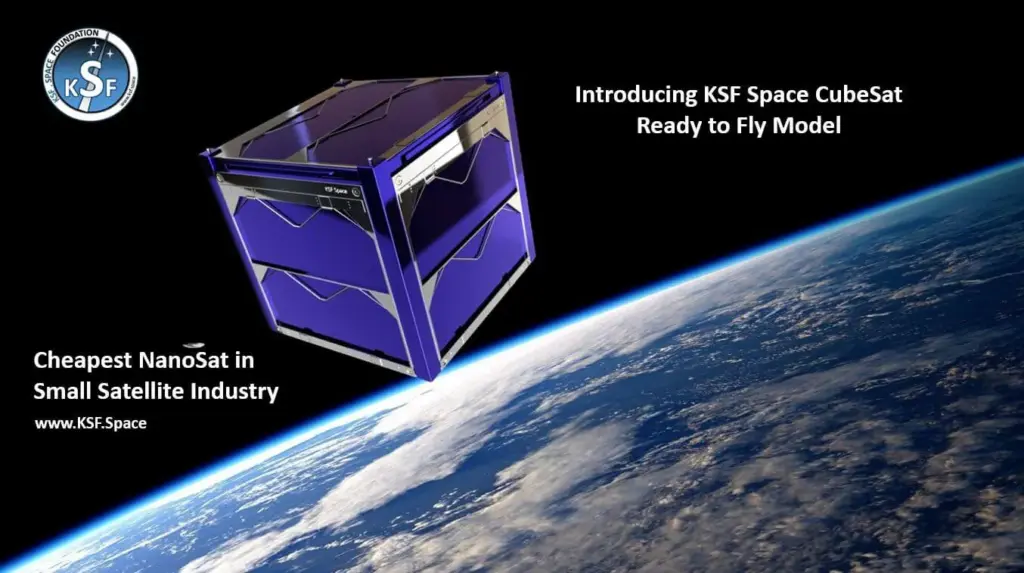
Before diving into the curriculum, it is essential to understand the architectural standard driving the small satellite revolution. A CubeSat is a standardized class of research spacecraft built using uniform units of volume and mass:
1U CubeSat: Measures exactly 10 x 10x 10 cm with a mass target of approximately $1.33 kg to 2.0 kg.
2U Cubesat: 10x10x20 cm
3U Cubesat 10x10x30 cm
By leveraging Commercial-Off-The-Shelf (COTS) electronic components and standardized deployment mechanisms (like the P-POD deployer), CubeSats drastically reduce launch costs and development cycles from decades to months.
Why the CubeSat Course by KSF Space is Essential for NewSpace
Traditional academic degree programs in mechanical, electrical, or software engineering offer vital core principles, but often lack real-time application in fast-moving small satellite environments. The NewSpace sector moves at a rapid pace, demanding cross-disciplinary systems engineers who understand how mechanical constraints, thermal dynamics, RF communications, and orbital mechanics intersect.
Bridging the Industrial Skills Gap
A major bottleneck facing aerospace startups, defense contractors, and space agencies worldwide is a severe shortage of qualified systems engineers trained in standard nanosatellite design constraints. Enrolling in the KSF Space CubeSat Course guarantees direct instruction in managing extreme volume, strict mass allocation, thermal vacuum (TVAC) environments, and tight power budgets.
Global Professional Credibility & The NEP Certification
Graduating from the program awards you the Nanosatellite Engineering Professional (NEP) designation—a globally recognized certification created by KSF Space. With a network of certified professionals spanning leading universities and space firms, the NEP credential serves as direct validation of your capabilities for recruiters across companies like SpaceX, Blue Origin, Rocket Lab, and global space research organizations.
Comprehensive Curriculum Breakdown: The 10 Core Pillars
The CubeSat Course is organized into ten distinct modules structured to mirror the real phase-by-phase lifecycle of an orbital space mission—from initial mission design (Phase A) through assembly, testing, integration, launch, and eventual de-orbiting (Phase F).
Pillar 1: Orbital Mechanics & Mission Analysis
Every satellite mission starts with clear orbital geometry and payload requirements. Students learn to model trajectories in Low Earth Orbit (LEO), Sun-Synchronous Orbit (SSO), and Geostationary Transfer Orbits (GTO) using key classical Keplerian Orbit Elements:
Semi-Major Axis : Defines the overall size of the orbit.
Eccentricity : Defines the shape of the orbit (circular vs. elliptical).
Inclination : Defines the tilt of the orbital plane relative to the equator.
Right Ascension of the Ascending Node : Defines the orientation of the orbital plane.
Argument of Perigee : Defines the orientation of the ellipse within the orbital plane.
True Anomaly : Defines the precise position of the satellite along its trajectory at a given time.
Pillar 2: Satellite Architecture & Frame Materials Science
Small satellites operate in unforgiving thermal and structural conditions. The CubeSat Course covers structural engineering standards, load calculations, and advanced materials:
Aluminum 6061-T6: The aerospace gold standard for high strength-to-weight ratio and structural stability.
Bio-Sourced Polymers (e.g., PA11): Innovative lightweight materials used to minimize launch mass by up to 40% while mitigating outgassing under thermal vacuum conditions.
Outgassing Protocols: Selecting materials that do not release volatile organic compounds under a $10^{-5} \ { Torr} vacuum, protecting delicate camera optics and solar cells from contamination.
Pillar 3: Electrical Power Systems (EPS)
A satellite cannot survive without power generation, storage, and precise distribution logic:
Solar Cell Technologies: Integrating high-efficiency triple-junction GaAs (Gallium Arsenide) cells on deployable or body-mounted panels.
Battery Chemistry: Managing Lithium-Ion/Lithium-Iron-Phosphate cell discharge rates during orbit eclipse periods while accounting for extreme temperature variations
Power Distribution Units (PDU): Implementing Maximum Power Point Tracking (MPPT) regulators and over-current protection circuits.
Pillar 4: On-Board Computer (OBC) & Software Architecture
The OBC is the central brain of the spacecraft. The CubeSat Course explores:
Microcontroller vs. FPGA architectures designed for radiation tolerance (Single Event Upset mitigation).
Real-Time Operating Systems (RTOS) like FreeRTOS or cFS (Core Flight System).
Command & Data Handling (C&DH) protocols, telemetry data formatting, and automated fault detection, isolation, and recovery (FDIR).
Pillar 5: Attitude Determination & Control System (ADCS)
Spacecraft pointing accuracy dictates payload success, whether aiming a camera at a city or pointing an antenna at a ground station. The CubeSat Course covers:
Sensors: Magnetometers, Sun sensors, horizon sensors, and miniaturized star trackers.
Actuators: Magnetorquers (for detumbling after release) and 3-axis reaction wheels (for fine pointing adjustments).
Control Algorithms: Proportional-Integral-Derivative (PID) and Extended Kalman Filter (EKF) implementations for accurate state estimation.
Pillar 6: Communications, RF Engineering, & Link Budgets
Connecting ground operators with the satellite requires thorough RF calculation.
Pillar 7: Payloads & Scientific Instrumentation
Payload design is tailored to specific mission objectives:
Optical Payloads: High-resolution RGB and Multispectral sensors for Earth Observation.
RF Payloads: Automatic Identification System (AIS) receivers for ship tracking and Automatic Dependent Surveillance-Broadcast (ADS-B) for aviation tracking.
Microgravity Experiments: Biological, fluid, or material science tests conducted inside pressurized payload bays.
Pillar 8: Environmental Testing & Thermal Vacuum (TVAC) Validation
Before any satellite is cleared for launch, it must undergo rigorous environmental screening within the framework of the CubeSat Course:
Vibration Testing: Simulating the acoustic and mechanical shock loads of rocket launch profiles (sine sweep and random vibration tests).
Thermal Vacuum (TVAC): Exposing the flight model to extreme cold/hot cycles in a vacuum chamber to induce thermal stress and detect latent material defects.
Pillar 9: Launch Services, Deployers, & Safety Compliance
Integration into the launch vehicle requires strict adherence to launch provider specifications taught throughout the CubeSat Course:
Mechanical Interfaces: Designing according to the standard CubeSat Design Specification (CDS) for compatibility with deployment systems such as P-POD (Poly-Picosatellite Orbital Deployer) or ISIPOD.
Rideshare Logistics: Understanding how small satellites are loaded as secondary payloads alongside larger primary satellites on rockets like the SpaceX Falcon 9 (Transporter missions).
Inhibits & Flight Switches: Wiring mechanical deployment switches to ensure the satellite remains completely unpowered until 30 minutes post-ejection into space.
Pillar 10: Regulatory Licensing, Spectrum Management, & Space Sustainability
Operating in space requires legal and environmental compliance, a major focus area of the CubeSat Course:
International Telecommunication Union (ITU): Filing for radio frequency allocations to prevent signal interference with other satellites.
National Regulators: Navigating national licenses (e.g., FCC in the US, Ofcom in the UK).
Space Debris Mitigation: Ensuring the satellite naturally de-orbits within established international guidelines (e.g., 25-year/5-year rule) using passive drag sails or active propulsion modules.
Practical Application: The KSF Space CubeSat Kit 2.0
While the NEP certification is a self-paced, online theoretical program, practical hands-on application accelerates career readiness. KSF Space offers students, research labs, and universities access to the CubeSat Kit Version 2.0 as part of their CubeSat Course ecosystem.
This kit acts as a complete "FlatSat" hardware environment, giving students direct experience with real hardware modules:
Modular Microcontroller Board: Emulates the flight computer (OBC) logic with standard bus protocols
Power Management Board & Solar Cells: Real-time monitoring of solar power generation and battery management system (BMS) logic.
Integrated Sensors: IMU (Accelerometers, Gyroscopes), temperature sensors, and magnetometers for simulating ADCS feedback loops.
Transceiver Module: Short-range wireless link simulating satellite telemetry downlinks and command uplinks.
Technical Comparison: Traditional Satellite vs. CubeSat Architecture
To understand why taking a dedicated CubeSat Course is vital for modern engineers, consider how nanosatellite engineering differs from legacy aerospace projects:
| Feature / Metric | Traditional Legacy Satellite | Nanosatellite / CubeSat (1U - 3U) |
|---|---|---|
| Average Mass | $1,000 \{ kg} - 6,000 \{ kg} | $1.3 \{ kg} - 6.0 \{ kg}$ |
| Development Cycle | 5 to 15 years | 6 to 18 months |
| Total Cost | $100M to $1B+ | $50K to $500K |
| Components | Custom radiation-hardened components | Commercial-Off-The-Shelf (COTS) + Screening |
| Primary Launch Type | Dedicated sole payload | Rideshare / Secondary Payload (P-POD) |
| Risk Tolerance | Extremely Low (Zero Tolerance) | Moderate to High (Rapid Iteration) |
| Target Mission Life | 10 to 15+ years | 1 to 3 years (LEO) |
Career Impact: Commercial & Research Applications
Graduating with the Nanosatellite Engineering Professional (NEP) credential via the CubeSat Course opens doors across high-growth sectors of the global space economy:
1. Earth Observation (EO) & Climate Science
CubeSats operating in Sun-Synchronous Orbits capture high-resolution imagery used for tracking deforestation, monitoring ocean plastic accumulation, estimating agricultural crop yields, and assisting disaster response teams in real time.
2. Global Internet of Things (IoT) & M2M Telemetry
Traditional terrestrial cellular networks cover less than 20% of the Earth's surface. LEO CubeSat constellations bridge this gap, connecting remote maritime sensors, oil pipelines, cargo containers, and agricultural stations globally.
3. Microgravity Research & Biotechnology
Microgravity alters fluid dynamics, crystal growth, and biological processes. CubeSats equipped with specialized automated micro-laboratories allow pharmaceutical companies to test new drugs and grow complex protein crystals without human crew requirements.
4. Defense & Space Domain Awareness (SDA)
Government bodies increasingly rely on low-cost, resilient nanosatellite swarms for continuous tactical intelligence, surveillance, and reconnaissance (ISR) and space object tracking.
How Universities & Enterprises Benefit from KSF Space Integration
The KSF Space Foundation provides scalable educational solutions for institutions worldwide looking to deploy their own CubeSat Course curriculum:
Academic Institutional Licensing
Setting up a new aerospace engineering department requires millions in infrastructure and years of accreditation planning. Universities partner with KSF Space to integrate the CubeSat Course into existing Mechanical, Electrical, Computer Science, or Physics degree tracks. This allows institutions to immediately deliver flight-proven nanosatellite coursework certified by an accredited non-profit foundation.
Industry Workforce Upskilling
Established defense and telecom corporations pivoting toward low-Earth orbit constellations use the CubeSat Course to rapidly train traditional engineers on small-satellite design standards, payload constraints, and fast-paced NewSpace processes.
Enrollment Roadmap: Earning Your NEP Certification
Getting certified through the KSF Space CubeSat Course is designed to fit flexible schedules for full-time engineers and students:
Enrolling online in the CubeSat Course unlocks full access to the KSF Space Learning Management System (LMS), including the high-definition video lecture series, presentation decks, and the complete NEP Version 2.0 E-Book.
Work through the self-paced CubeSat Course coursework covering Mission Analysis, Subsystem Integration, Space Environment Dynamics, Communication Systems, and Launch Logistics.
Apply theoretical knowledge by configuring, assembling, and programming hardware sensors on the optional KSF Space CubeSat Kit 2.0.
Complete the final accredited online exam provided in the CubeSat Course to evaluate your grasp of nanosatellite architecture, systems engineering principles, and launch compliance.
Earn your official Nanosatellite Engineering Professional (NEP) certificate, accredited by IFGICT, and add your official credential ID to your CV and LinkedIn profile.
Frequently Asked Questions (FAQ)
What makes the KSF Space CubeSat Course unique compared to standard aerospace engineering courses?
Unlike broad university aerospace programs that focus on heavy aircraft or massive multi-ton satellites, the CubeSat Course by KSF Space is built specifically for the 1U–3U small satellite standard. It bridges theory with real NewSpace operational practices, covers regulatory compliance, and awards the globally recognized IFGICT-accredited NEP credential.
Are there strict technical prerequisites to enroll in the CubeSat Course?
While a background in mechanical engineering, electrical engineering, computer science, or physics is helpful, there are no strict barriers to entry for enrolling in the CubeSat Course. The curriculum is structured to build foundational knowledge before guiding students through complex systems integration and orbital mechanics.
How is the course delivered, and is there a strict deadline for completion?
The CubeSat Course is 100% online and completely self-paced. Once enrolled, you get lifetime access to the LMS, video lectures, and the NEP Version 2.0 textbook, allowing you to study at your own convenience without fixed deadlines or mandatory live sessions.
Does the online course include physical hardware?
The standard online NEP certification program provided in the CubeSat Course is purely theoretical. However, KSF Space offers an optional hardware add-on—the CubeSat Kit Version 2.0—which provides a physical "FlatSat" environment for hands-on assembly and component testing.
How does this course help with my CV?
The CubeSat Course provides you with a Nanosatellite Engineering Professional (NEP) certificate. Listing this on your LinkedIn profile or resume signals to recruiters that you have specialized, industry-standard training in one of the fastest-growing sectors of tech.
Take Your Career to Orbit
The NewSpace economy is expanding rapidly, and demand for certified nanosatellite engineers has never been higher. Enrolling in the CubeSat Course by KSF Space grants you the technical tools, regulatory insights, and professional credentials required to build flight-ready satellite hardware.
Official Website: www.ksf.space
General Inquiries: [email protected]
Course Registration: CubeSat Course Enrollment
As featured on

KSF Space Foundation is a USA non profit organization registered in Delaware #5605031 offers support in numerous areas,
Working hours
Mon-Fri: 9 AM – 5 PM
Saturday: 9 AM – 5 PM
Sunday: closed
Quick Link